16 November 2026 · 5 min read · Teaching & Coaching
Teaching Motorways and Dual Carriageways: Skills They Already Have, Lessons They'll Never Forget
Mention the word "motorway" to a learner and watch their face. Mum is nervous about them, Dad has a horror story, and an older sibling has told them all about the "fast lane". By the time they get to you, a lot of pupils have decided this is the scariest part of learning to drive.
Here's the thing: it's actually one of the easiest topics to teach, and it can be a real light bulb moment. Pretty much every skill a pupil needs on a motorway or dual carriageway, they've already used somewhere else.
In this post we'll share how we introduce the topic, the three types of lesson Phil uses, how Diana breaks the skills down at speed, and the post-test conversations that matter just as much as the driving. We'll also borrow some ideas from Rob Cooling, who joined Phil on the Inspire podcast to talk about his own (very extensive) approach.
Start With What They Already Know
Before you go anywhere near a slip road, help the pupil link motorways back to earlier topics. Joining from a slip road is no different to joining a roundabout at speed: they assess the gap, manage their speed and merge. Changing lanes and checking over the shoulder? They've done that turning right at roundabouts. Looking for a gap in both directions? That's every right turn out of a junction they've ever made.
Framed that way, the conversation starts on a positive footing. You're not introducing something new and frightening. You're showing them how far they've already come.
Phil starts the way he starts every new topic: "Tell me what you know about dual carriageways." That conversation might even tell you you're not ready yet. If a pupil has never been in fifth gear, practise that on a quiet single carriageway first.
Listen out for the classic "slow lane, middle lane, fast lane". Diana hears it almost every time. Rather than correcting it, ask: "What's the speed limit on the motorway? Is that for the whole road?" It opens up a lovely discussion about when we'd use the right-hand lane and why.
Three Types of Lesson
Phil splits motorway and dual carriageway teaching into three types of lesson. They might each take more than one session, but the focus is clear:
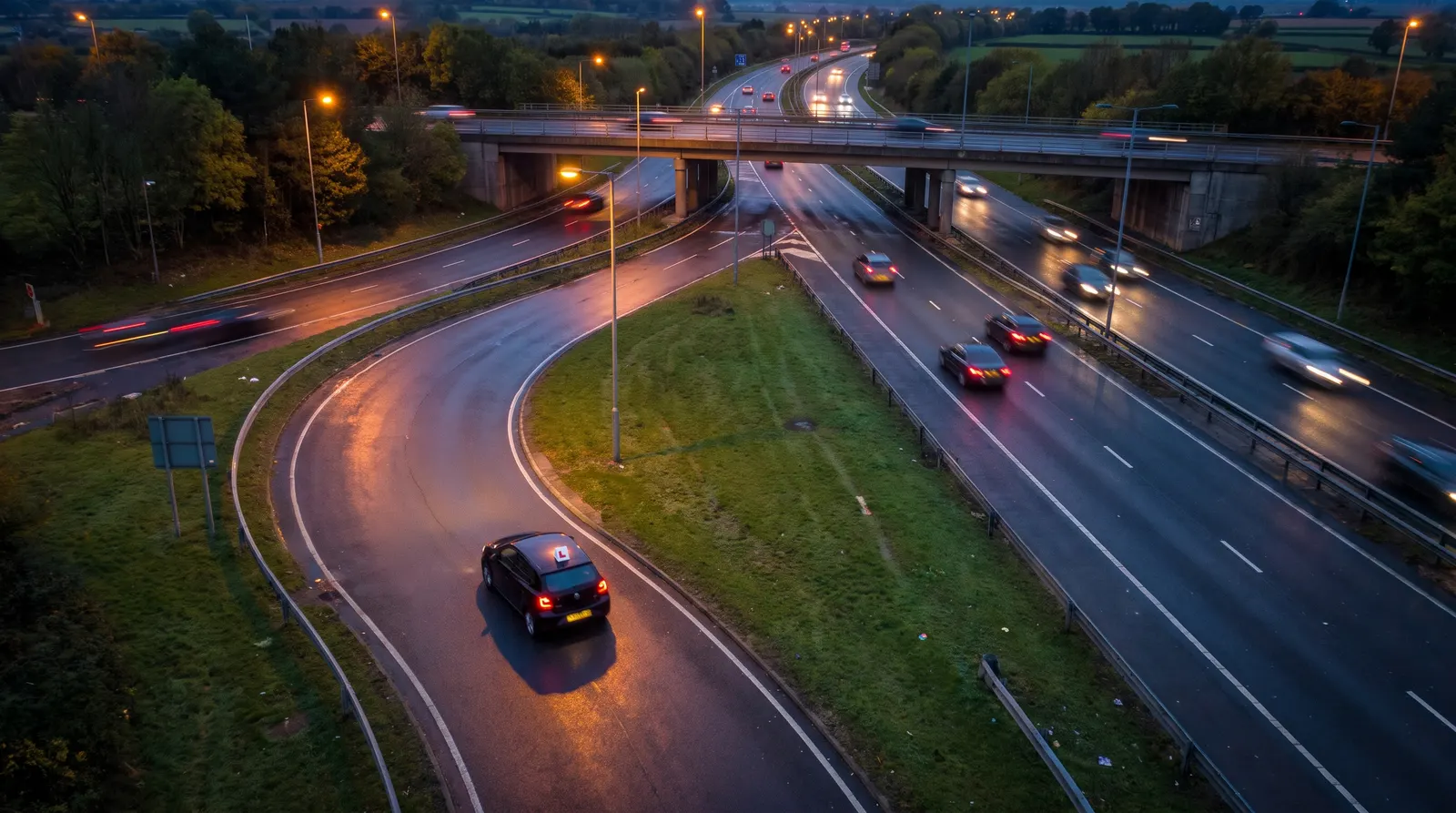
- Joining and leaving. Come on and off at every exit. Driving past a slip road is a missed learning opportunity, so loop back and do it again.
- Awareness and planning. Now we stay on. What are the other cars doing? How are we managing slip roads we're driving past? Is the pupil making good progress?
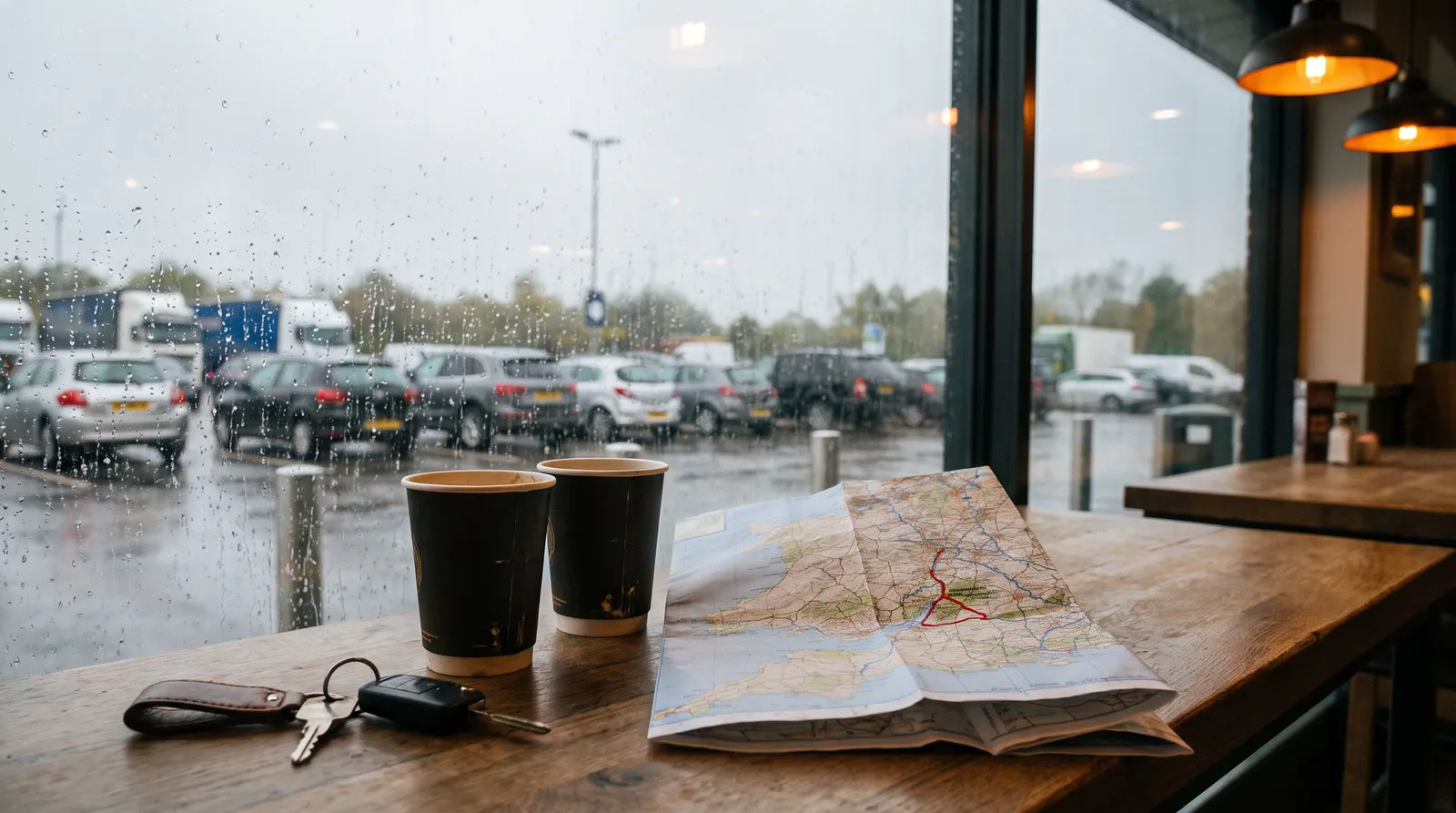
- The long drive. A real journey, the kind they'll actually use the motorway for. Phil drives to a services about an hour and a half away, stops for a coffee, then drives back. Book a longer slot, because fatigue and boredom are part of the lesson.
Whichever one you're doing, build in places to stop. Experiential learning still needs reflection time, and that's hard at 70. Pull over after the first join and leave: how did that feel? What shall we change?
Photos help too. If there's an odd junction in your area, like a right turn across a dual carriageway or an "end of dual carriageway" sign that pupils mistake for a lane merge, show them a picture at the side of the road first. Let them work it out while parked, not on the approach at speed.
Breaking It Down Into the Five Skills
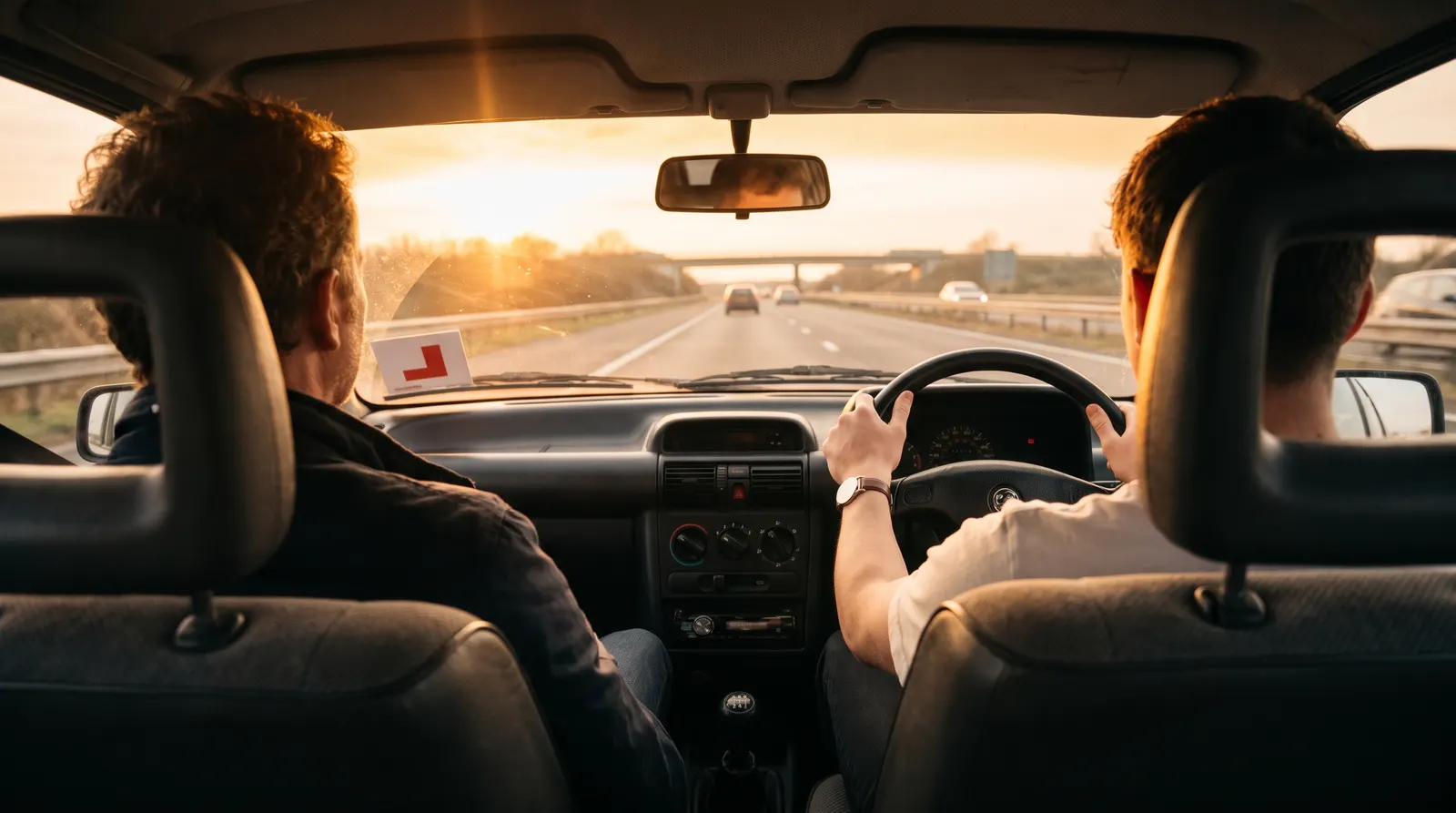
Diana uses the five skills (car control, awareness, anticipation, planning and judgement) to structure these sessions, because motorways use every one of them.
Car control. Ask what happens to the steering at higher speeds, and why we zip off a slip road rather than trickling out. Then, on a long, straight, quiet stretch in the left lane, let them explore it: get as close to the line as you can without crossing it while you handle the observations. They quickly learn how far the car moves with the slightest input. Do the same with the gas pedal, so they find the tiny touch that holds 70 rather than swinging between 40 and 80.
Awareness. Practise mirror checks and see what happens: did the car drift? Then practise the quick shoulder check. Diana's pupils know it as "peck the parrot". Ask them to tell you when a car in the mirror disappears, so they feel where the blind spot really is.
Anticipation. "Let's see if you can read the future." What's the car in front about to do? How do you know a slip road is coming? Signs help, but a bridge over the motorway is a great early clue. One of Diana's anxious pupils simply moved to the middle lane whenever she suspected a slip road. It managed her nerves perfectly.
Planning and judgement. Swap "Is it safe to move right?" (a yes or no) for "What are you looking for before you move right?" Have them take a mental snapshot of a car, look away, and check again to judge its speed. Talk it through in the left lane before they try it for real.
The Post-Test Conversations
Lots of what keeps a driver alive on a motorway can't be practised on a lesson, so it has to be covered in conversation. A service station stop is the perfect place for it.
- Breakdowns. Getting to the left if you can, hazards on, getting out on the left, and getting behind the barrier, even when it's cold and raining.
- Telling people where you are. The marker posts and signs that pinpoint your location so help reaches you sooner, and the posts pointing to the nearest emergency phone.
- Being prepared. A charged phone, warm clothes, water and a warning triangle for long journeys.
- Smart motorways. Variable speed limits and lanes that open and close, even if there aren't any near you.
- Emergency vehicles. Look much further back, and know how to let them through. Blue Light Aware has some great short videos you can share with pupils.
- Fatigue. Rob plans a backup rest stop as well as the main one, and talks openly about how he manages his own tiredness. Phil adds the passenger problem: when everyone in the car wants to get home, a new driver needs permission to say, "We're stopping."
A Tip for PDIs
PDIs can't take learners on the motorway: it has to be an ADI in a dual-controlled car. Phil's workaround when he started out was to sell a post-test motorway lesson in advance. If the pupil passed, he taught them on the motorway as a new driver. If they didn't, it simply became a normal lesson. Either way, you get valuable experience of teaching the topic.
Wrapping Up
Motorways don't need to be scary. Link them to skills your pupils already have, give each lesson a clear focus, stop to reflect, and use the long drive and the services to have the conversations that keep new drivers safe long after the test. As Rob put it on the podcast, passing the test is barely the beginning.
If you'd like more practical sessions like this, with Zoom recordings, CPD and a supportive community of instructors, join the Inspire membership.
Free, every week
Get each new article in your inbox.
One email when a new post goes live. Practical ideas on coaching, the Part 3, Standards Checks and running your school.